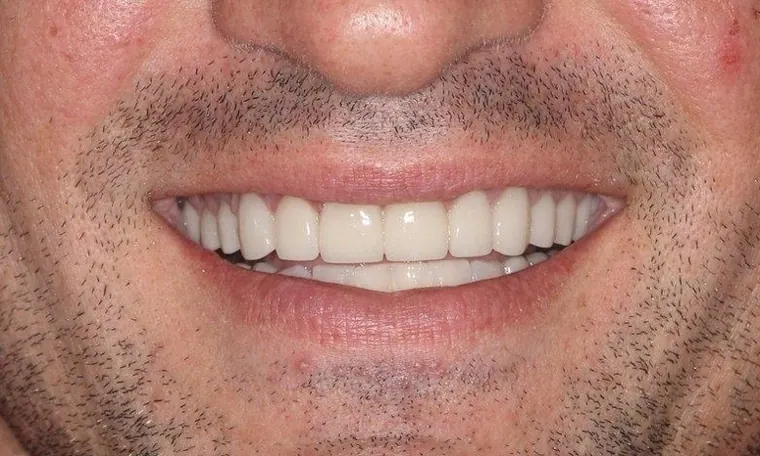
Tooth-coloured fillings
Composite fillings are matched to the shade of your teeth, so they disappear when you smile, unlike silver fillings. Patients often ask whether their old amalgam fillings are safe. Studies by U.S. public health agencies and the CDC have found that the mercury in amalgam does not pose a health risk. Older fillings can leak or loosen with age, though, so if you are worried about yours, have them checked.
Onlays
When a tooth needs more than a filling but not a full crown, an onlay is the conservative choice. It is made in a lab, like a crown, from tooth-coloured material, then bonded to the tooth. Onlays keep more of your healthy tooth, resist staining and, once placed, are practically invisible.
Crowns
A crown covers a tooth that has been badly damaged by decay or injury, restoring its shape and strength. Today's ceramic crowns look just like natural teeth. Crowns can also hold a bridge in place across a gap, or sit on an implant to replace a missing tooth entirely.
Bridges and full-mouth reconstruction
When several teeth are missing, a bridge or a partial denture restores the gap at a lower cost than implanting every tooth. For a mouth that needs a lot of work, both doctors plan full-mouth reconstruction: crowns, bridges, implants and dentures, sequenced into one plan you understand before anything starts.
Why not just leave it?
When a tooth is damaged or missing, the others have to work harder to compensate. That leads to wear, fractures and, eventually, more lost teeth. Restoring early protects everything around it.
