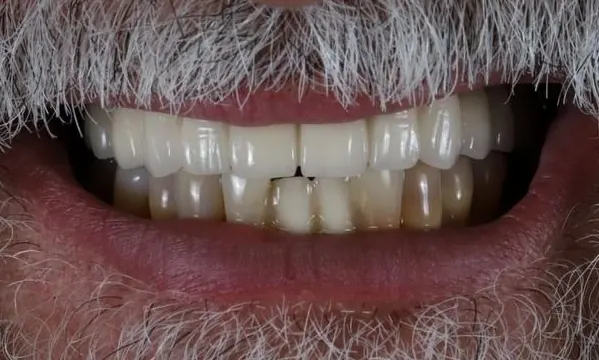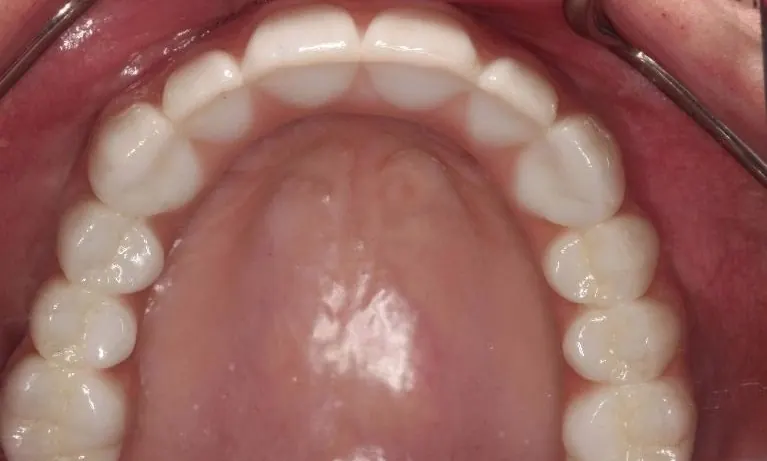
Why replace a missing tooth at all?
A gap affects more than your smile. The moment a tooth is lost, the bone that held it starts to shrink. Gums pull back, the teeth either side drift and loosen, and over years the face can take on a sunken look that adds age. Many people also find themselves chewing on one side, or smiling with their mouth closed.
An implant stops that chain. It replaces the root as well as the tooth, so the bone keeps working and stays where it is.
What a dental implant is
An implant is a small titanium post placed in the jawbone. Over the following months the bone bonds to it, a process called osseointegration. Once it has, a connector called an abutment goes on top, and the visible tooth is fitted to that: a crown, a bridge or a denture, shaded and shaped to match the teeth around it.
Because the post is anchored in bone, an implant tooth does not move, click or come out. You brush and floss it like any other tooth. Patients of this office have had implants for more than thirty years that work exactly as they did on the day they were placed.
One missing tooth, several, or all of them
- A single implant and crown replaces one tooth without touching the healthy teeth either side.
- An implant-supported bridge spans several missing teeth on two or more implants.
- An implant-retained denture snaps onto implants, so a loose denture finally stays put.
- A full fixed arch replaces every tooth in the upper or lower jaw with teeth that stay in, on as few as four implants.
Are you a candidate?
Most adults are. You may be a good candidate if you have one or more missing teeth, healthy gums, and either enough jawbone or the willingness to have it rebuilt with a bone graft. Smoking, uncontrolled diabetes and some medications slow healing, and implants are postponed during pregnancy. The consultation sorts all of that out.
Told you cannot have implants? That usually means another dentist saw too little bone. Both doctors have advanced training in grafting and take on difficult cases. It is worth a second opinion.
Does it hurt?
You should feel no pain during placement, only some pressure. Many patients say they needed nothing stronger than ibuprofen and a cold compress afterwards. If you are anxious, IV sedation is offered here, which few offices in Louisiana can do.